Radishes and Flowers
a Wallace Stevens song cycle
by Jesse Blake Rundle
Listen on Spotify, Apple, Youtube
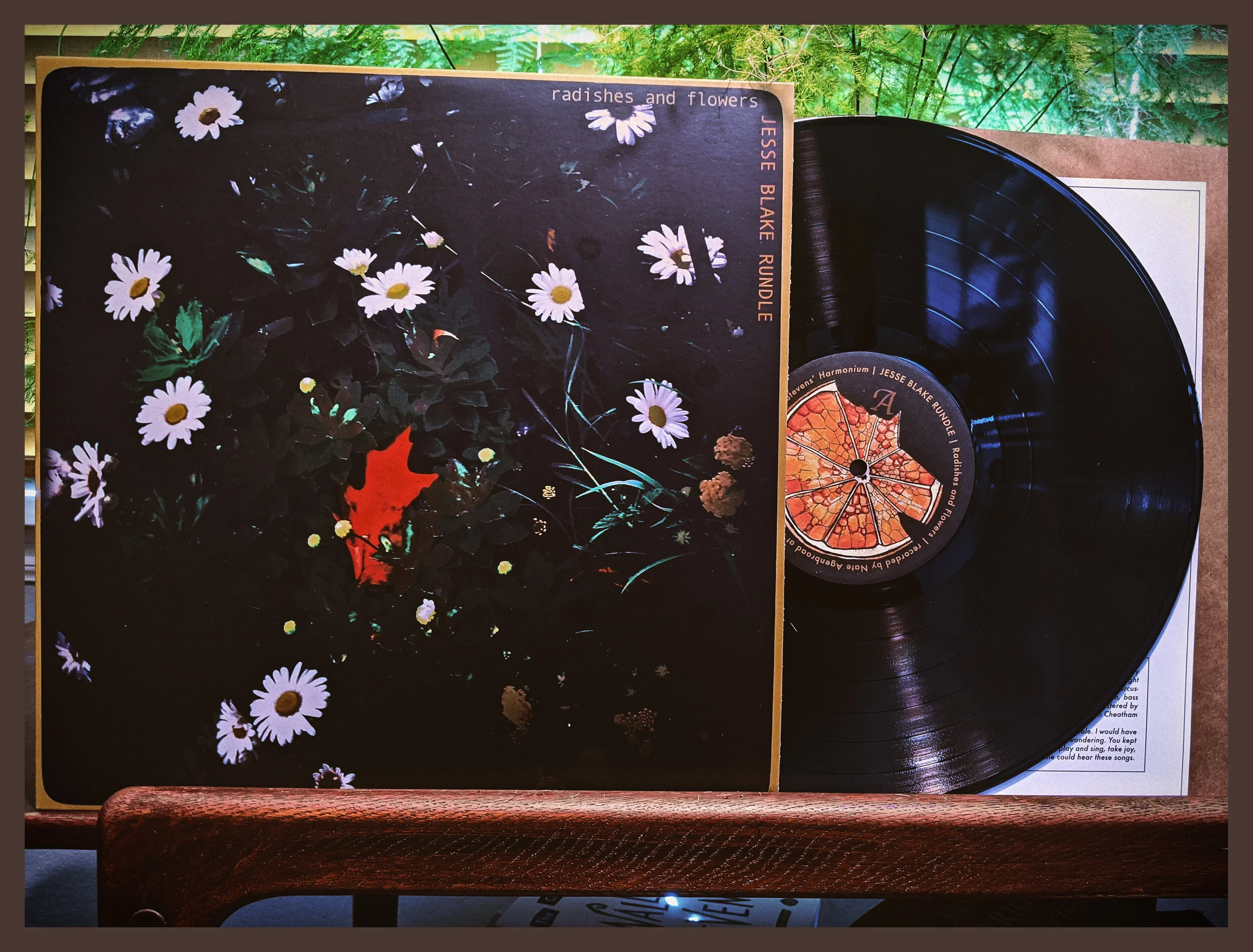
I’d love your support in whatever way works for you. Listen (free on Bandcamp), share it with a friend, get the vinyl, drink some tea and read the poems in the liner notes. Thanks for being a part of it.
A Wallace Stevens song-cycle
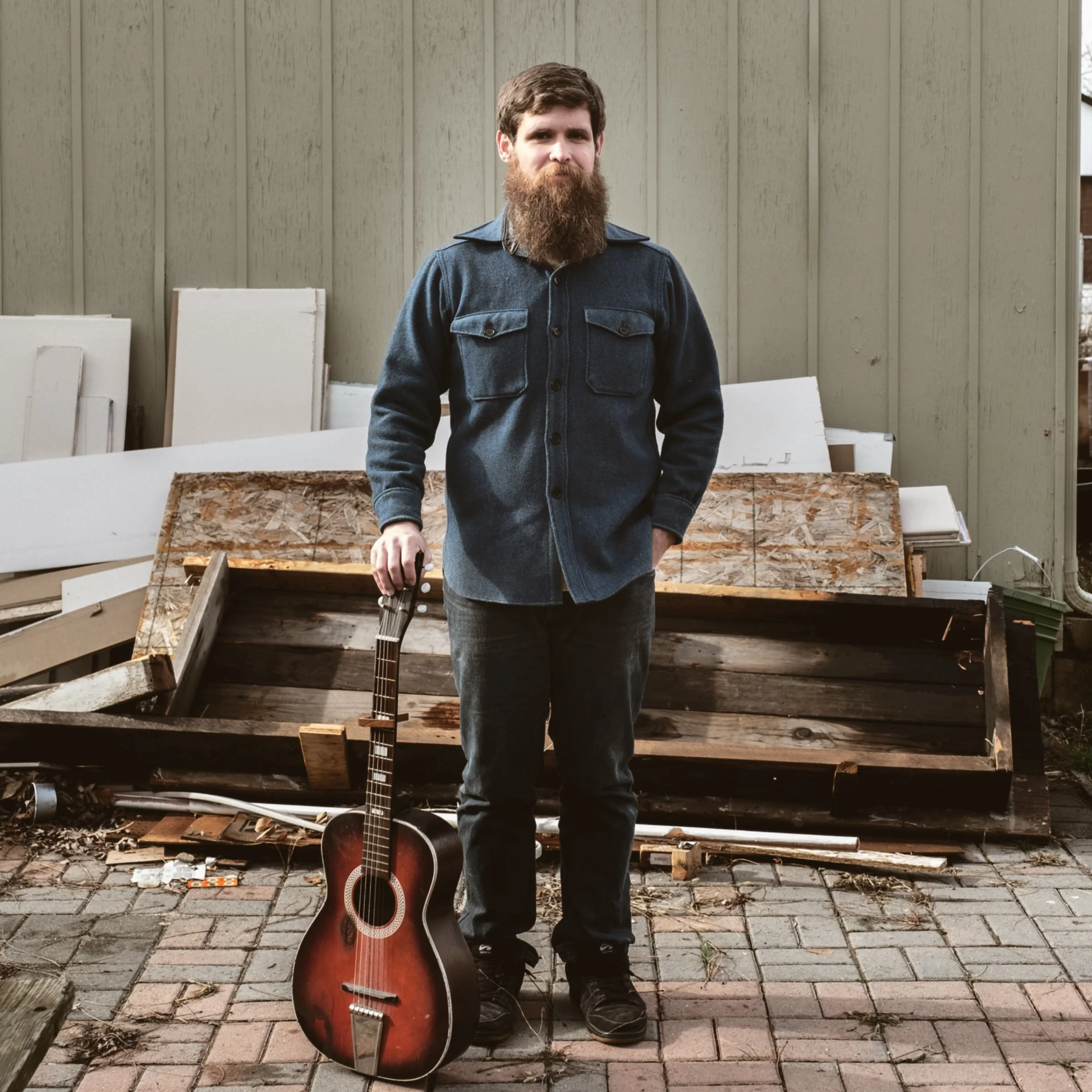
Radishes and Flowers is a song cycle adapted from Wallace Stevens Harmonium. Jesse Blake Rundle, and Idaho based composer and songwriter, wrote and performed the arrangements and recorded them at Mixed Metaphor Studios in Boise, Idaho.
Jesse brings an idiosyncratic approach to guitar through years of playing in unconventional tunings. His background in classical piano and composition influence the diverse arrangements across the album. In addition to the guitars and keyboards, several friends join in to help with horns, woodwinds, and percussion.
The arrangements have an exuberant energy that follows the shape of poetry with care and precision. The song structures are at times unconventional to pop music while still developing motifs and interlocking melodic and rhythmic patterns.
The opener, "Nomad Exquisite", is an anthemic folk tune that lunges with guitars and quarter-note tambourines into the scene of everglades and then sits for a while to reflect while the swampy synths swell around the tune until it erupts again. Rundle often blends various organs tones with acoustic and electric guitars to create the spacious and grand nature of an orchestral arrangement. Or, as in the 60's pop inspired "Emperor of Ice Cream", the jumpy ice-cream-truck organ tone drives with an undeniable beat that erupts into a roomful of chaos at the end.
The album revels in the images of the poems and what's to be found there: how green everything is in Florida; Captain Profundo imagining a drink of orangeade; a cat charging across the plains of Oklahoma; a lamp shining a light on death. The title track opens with a deceptively simple chamber arrangement for four guitars while the story of Ursula unfolds. But then the book closes, opens again, and the song explodes into indie-rock fanfare.
The album artwork was created by Boise artists Ryan Hadden and Ryan Allan Cheatham who added a visual reading of the poems to the musical reading contained in the songs.

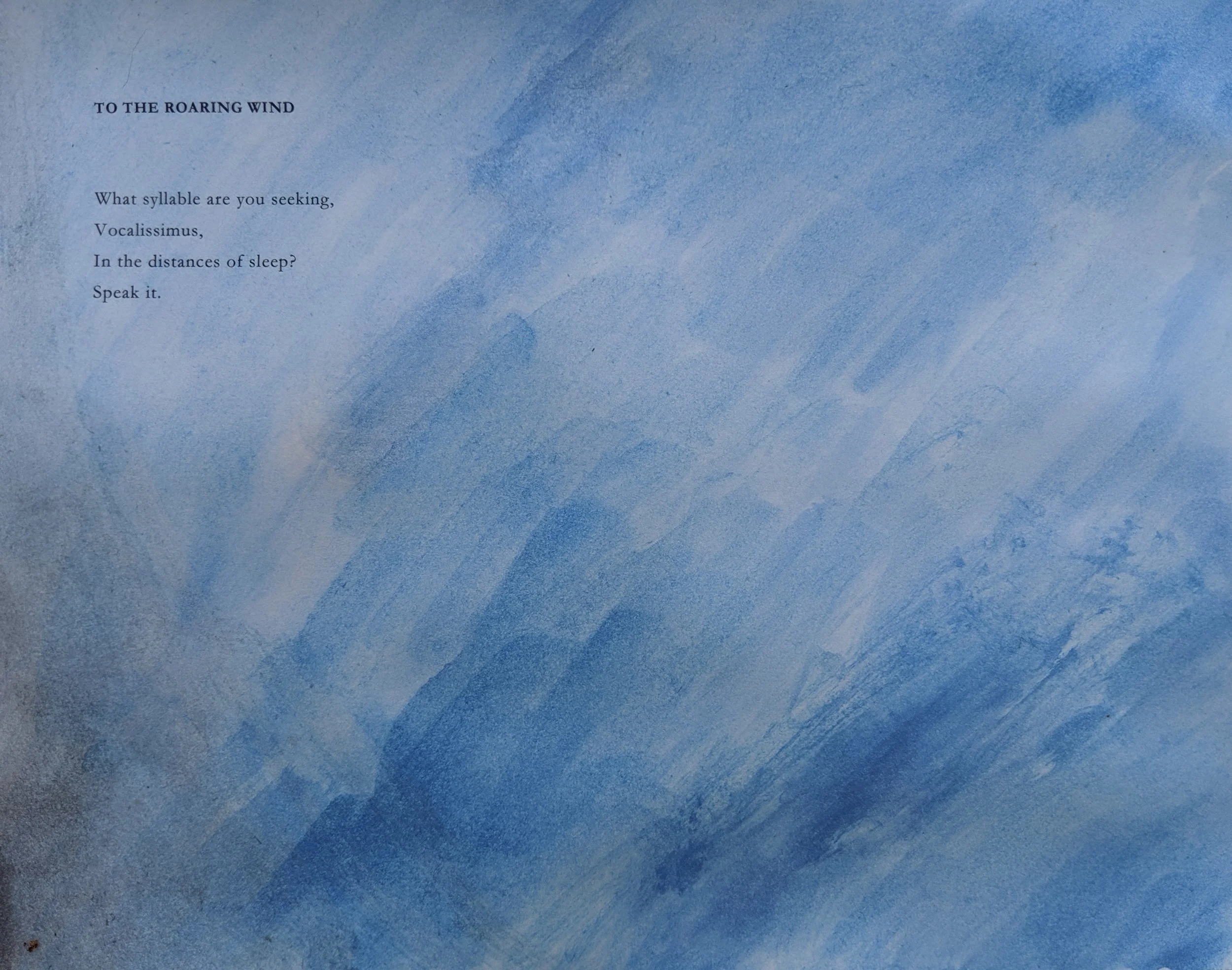
To The Roaring Wind by Wallace Stevens
The Final Song in the cycle

Why I made this
I don't know why I made this except that I felt compelled. In the wake of my mother’s death when I was 27, everything felt unsteady and I needed some path forward. I was looking for words that would take me somewhere – words that mattered.
She was young when she died, and we were her caretakers in the last years. It was a special time and an intense time. At the end, everything crumbled. The stable center of our family life was gone. And the musical center too. She’d taught us all to play and sing as kids and the house was filled with music throughout our lives: Christmas singalongs, church choirs, and late night piano solos.
In the midst of that grief, I didn’t have much I wanted to say. Everything inside me felt jumbled and dark, and the faith tradition I knew felt empty and full of platitudes. I went searching.
A few years before in Santa Fe, there was a group of us that spent much of our time out of class listening to music, discussing poetry, talking and laughing. One friend was always plucking out Bach’s first fugue, Dylan Thomas was on the record player, another friend was scribbling in a notebook. It was a swell time. A friend from that group left town and, as a parting gift, she gave me a copy of Stevens' Harmonium. It was one of those rare gifts – she had picked out something I didn’t know I needed. I never saw her again after that.
Over the years, the poems seeped into the way I think, the way I see. I carried that book around with me to parks, coffeeshops, and airplanes. Reading “The Emperor of Ice-Cream” in those days was mostly confusing, and it wasn’t until writing the album that it hit home. With the dead woman’s feet sticking out under the sheet, “they show how cold she is and dumb” – it just made me weep. But poems like “The Death of a Soldier” captured a Kansas boys’ imagination with the clouds and wind. I still recall the windy day I first read it, with the cloudy skies overhead and that pure image, “when the wind stops,” sticking in my mind. It was a chilling, but real, feeling. It is hard to look death in the face.
So, around 2017, I started writing. The first song was a surprise — the book was open and I had a guitar — but after that, it quickly became a mission. I started shaping them into a song cycle and playing them around Boise. It was around then that I met Nate Agenbroad and started working in his studio. He became a partner in bringing the project to life.
I had no idea how many people would join in to help along the way. At many points I’ve almost given up, and would have without the encouragement of friends. At times, I’ve been embarrassed to have made it – to be “that guy that sings poems.” But the muse speaks. So here it is.